

Dubai’s waterways tell a story of evolution from traditional abras ferrying traders across the creek to sleek, electric ferries gliding through the modern skyline. The emirate’s vision for innovation and sustainability has transformed its marine transport network into a seamless extension of urban mobility. Smart mobility supports the global transition toward cleaner transport powered by sustainable energy. Today, exploring Dubai by water is more than just a commute; it’s an experience that celebrates culture, comfort, and the city’s green ambitions.
As part of this transition, Dubai Ferry’s services and modern water taxis are increasingly aligned with the city’s broader push toward electric vehicles and low-emission public transport. Electrified marine transport complements road-based vehicles by reducing congestion while offering efficient and sustainable alternatives for crossing Dubai’s waterways.
The Role of Water Transport in Dubai’s Urban Mobility
Water transport is a vital part of Dubai’s public transport ecosystem, managed by the Roads and Transport Authority (RTA). It connects major districts such as Deira, Bur Dubai, Business Bay, and Dubai Marina, easing road congestion while offering scenic routes for residents and visitors alike. With an emphasis on eco-friendly solutions, Dubai is steering its marine sector toward clean propulsion systems powered by sustainable energy, a step aligning with the UAE’s long-term net-zero strategy.
As Dubai Ferry’s network continues to evolve, water taxis and ferries are being positioned as sustainable complements to road-based Electric Vehicles, helping balance passenger demand across multiple transport modes while reducing emissions.
The integration of abras, water taxis, ferries, and water buses creates a fluid, interconnected system that supports both commuters and tourists. These services not only enhance accessibility but also promote water-based tourism, a key contributor to Dubai’s growing economy.
By expanding water taxis and modern ferry services, Dubai strengthens a multimodal transport ecosystem where Electric Vehicles on land and electric-powered vessels on water work together to support efficient, low-impact urban mobility.
Traditional Abras: The Heart of Old Dubai
Long before the glittering skyscrapers rose, the humble abra ruled the waters of Dubai Creek. These small wooden boats, once manually rowed, are now motorized but still retain their old-world charm. For just a few dirhams, passengers can cross between Deira and Bur Dubai, experiencing a timeless slice of Dubai’s trading heritage.
While traditional abras remain largely unchanged, they coexist alongside modern water taxis and Dubai Ferry’s services, illustrating how heritage transport and Electric Vehicles can function together within a single urban mobility system.
The simplicity of the abra, open-air, communal, and rhythmic with the gentle sound of water, reflects the soul of old Dubai. Today, over 150 abras operate daily, carrying thousands of passengers across the Creek, preserving a tradition that has become both a cultural icon and a sustainable mode of short-distance transport.
This blend of traditional boats and modern electric water taxis highlights Dubai’s approach to sustainable mobility, where Electric Vehicles on water enhance transport options without displacing cultural heritage.
Electric Water Taxis: The Future of Water Mobility
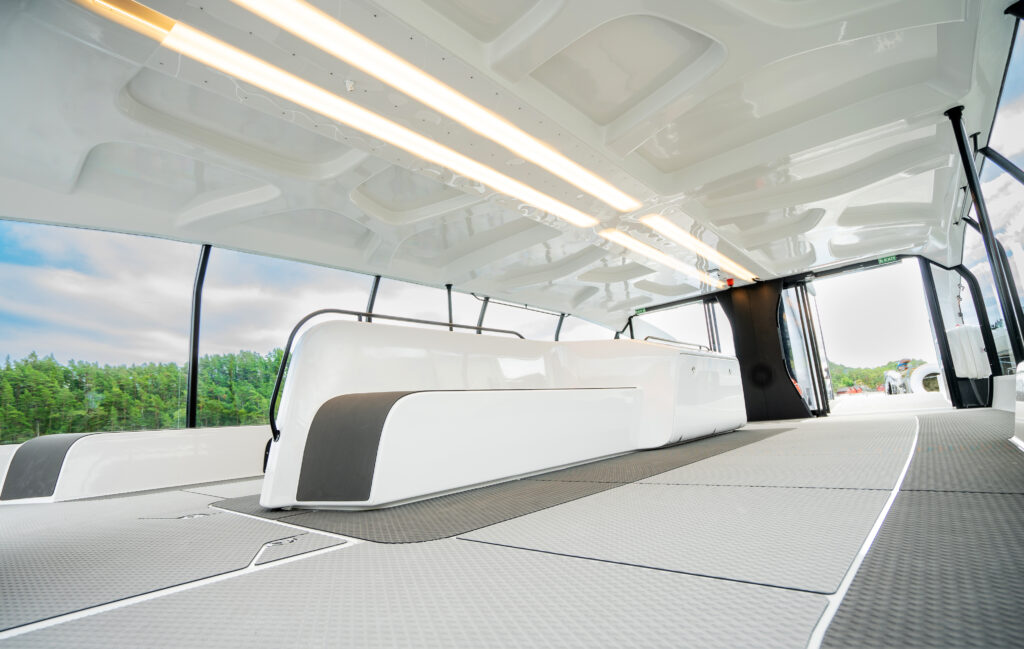
Dubai’s electric water taxi represents the next leap in marine innovation. Sleek, silent, and emission-free, these vessels are designed for comfort and convenience. Operated by the RTA, electric water taxis serve key locations such as Dubai Marina, Palm Jumeirah, Bluewaters Island, and the Dubai Canal.
As part of Dubai Ferry’s broader marine transport vision, electric water taxis complement ferry services while aligning with the city’s wider adoption of Electric Vehicles across public transport networks.
Each water taxi features air-conditioned cabins, plush seating, GPS navigation, and panoramic windows, making it ideal for both daily commutes and sightseeing. Bookings can be made via the RTA app or directly at water transport stations. More importantly, these taxis demonstrate Dubai’s commitment to green mobility through the use of sustainable energy, significantly reducing noise and air pollution on its waterways.
By expanding water taxis powered by sustainable energy, Dubai strengthens a connected electric mobility ecosystem that integrates Electric Vehicles on land with zero-emission transport on water.
Modern Ferries: Where Comfort Meets Scenery
Dubai’s modern ferries are larger, faster, and designed for those seeking both convenience and views. Dubai ferries offer a scenic and efficient way to explore the city’s coastline and key landmarks. With routes connecting Al Ghubaiba, Dubai Marina, Bluewaters, and Business Bay, ferries offer an efficient yet scenic way to explore the city’s iconic waterfronts.
These Dubai Ferries’ routes play an important role in the city’s broader shift toward Electric Vehicles, offering a low-emission alternative to road travel while enhancing connectivity across waterfront districts.
Each journey unveils landmarks like the Burj Khalifa, Ain Dubai, and the twisting Cayan Tower, all visible from the comfort of a spacious, air-conditioned cabin.
For visitors and daily commuters alike, modern ferries and water taxis provide a sustainable option that complements land-based Electric Vehicles while reducing pressure on urban roads.
The Dubai Ferry service caters to both tourists and residents, providing smooth operations, digital ticketing, and onboard amenities. As part of Dubai’s clean transport vision, many ferries are now incorporating hybrid or solar-assisted technologies powered by sustainable energy sources.
By integrating advanced ferry systems with electric water taxis, Dubai continues to strengthen an electric mobility network that supports efficient, comfortable, and environmentally responsible travel.
Hyke: Driving Innovation in the UAE’s Marine Future
Hyke believes there’s strong commercial potential in the region for urban water mobility due to numerous new developments in Dubai, Abu Dhabi, and Ras Al Khaimah. The company is actively exploring long-term local partnerships to strengthen its presence and support the UAE’s sustainability goals. By collaborating with local authorities and industry leaders, Hyke aims to integrate its cutting-edge vessels into the region’s transport network.
As Dubai Ferry’s services and water taxis continue to evolve, Hyke’s electric solutions align with the UAE’s broader adoption of Electric Vehicles and low-emission public transport systems.
The UAE’s Net Zero 2050 Strategy builds on its national initiative to achieve net-zero emissions by 2050, driving economic growth and sustainability. Aimed at creating over 200,000 jobs and contributing 3% to the GDP, the strategy includes more than 25 programmes across six key sectors: power, industry, transport, buildings, waste, and agriculture. It focuses on boosting efficiency, renewable energy use, sustainable transport, and carbon capture technologies. Supported by climate finance, R&D, and workforce upskilling, the Ministry of Climate Change and Environment will lead coordination among 45+ national stakeholders to realize this ambitious vision.
Electric water taxis and modern ferry services play a supporting role in this transition by extending Electric Vehicles and sustainable mobility solutions beyond roads and into urban waterways.
Such initiatives align perfectly with Dubai’s vision of combining advanced technology, green practices, and smart infrastructure to redefine how cities move, not just on land, but across water.
By integrating electric ferries and water taxis into everyday transport planning, Dubai Ferry’s network contributes to a resilient electric mobility ecosystem that supports long-term environmental and economic goals.
Sustainability and Innovation on the Water
Dubai’s waterways are more than transport channels; they’re testbeds for innovation. The RTA continues to experiment with eco-efficient technologies, from solar-assisted boats to hybrid propulsion systems. These advancements, supported by both private and public sectors, are key to reducing carbon emissions and improving energy efficiency.
As Dubai Ferry’s services and water taxis adopt cleaner propulsion, they reinforce the city’s wider commitment to Electric Vehicles and sustainable transport across all modes of mobility.
As the city moves toward a smarter future, digital integration also plays a major role. Real-time GPS tracking, cashless ticketing, and AI-powered scheduling enhance passenger convenience while optimizing operational efficiency.
By combining smart systems with electric water taxis and modern ferry operations, Dubai strengthens an electric mobility framework that connects land-based Electric Vehicles with efficient, low-emission transport on water.
Such developments show how sustainable energy and digital transformation can coexist to create a cleaner, more connected Dubai.
Planning Your Water Journey
Navigating Dubai’s waterways is easy and rewarding. For short, authentic experiences, choose an abra across Dubai Creek. For private or direct travel, book an electric water taxi for a quieter and faster trip. And for sightseeing, the Dubai Ferry offers the best panoramic views of the skyline.
Together, water taxis and Dubai Ferry’s services provide flexible options that complement Electric Vehicles on land, allowing travelers to choose the most efficient and sustainable way to move across the city.
Using the RTA app, travelers can check real-time schedules, fares, and routes. Whether you’re commuting or exploring, each mode of water transport offers a unique perspective on the city, combining tradition, technology, and sustainability.
By integrating water taxis, modern ferries, and Electric Vehicles into a single planning experience, Dubai continues to build a seamless, low-emission urban mobility ecosystem.
Conclusion
Dubai’s waterways capture the city’s essence, seamlessly blending traditional abras with high-end electric ferries. From the iconic abra, now evolving through Dubai’s ongoing electric abra project, to the advanced electric ferry, every vessel marks a step toward a greener future. Hyke’s continued commitment to innovation signals a bright future for marine mobility across the UAE.
As Dubai Ferry’s services, electric water taxis, and modern ferries continue to expand, they reinforce the role of Electric Vehicles and clean propulsion systems in shaping sustainable urban transport on water.
As Dubai embraces sustainable energy and smart solutions, its shimmering waters will continue to symbolize both movement and momentum, carrying the city confidently into the future.
By integrating water taxis and ferry services into a unified electric mobility vision, Dubai strengthens a resilient, low-emission transport ecosystem that benefits residents, visitors, and the environment alike. Discover how Hyke could assist with transforming Dubai’s Waterways with Sustainable Energy Innovation. Contact us today.