

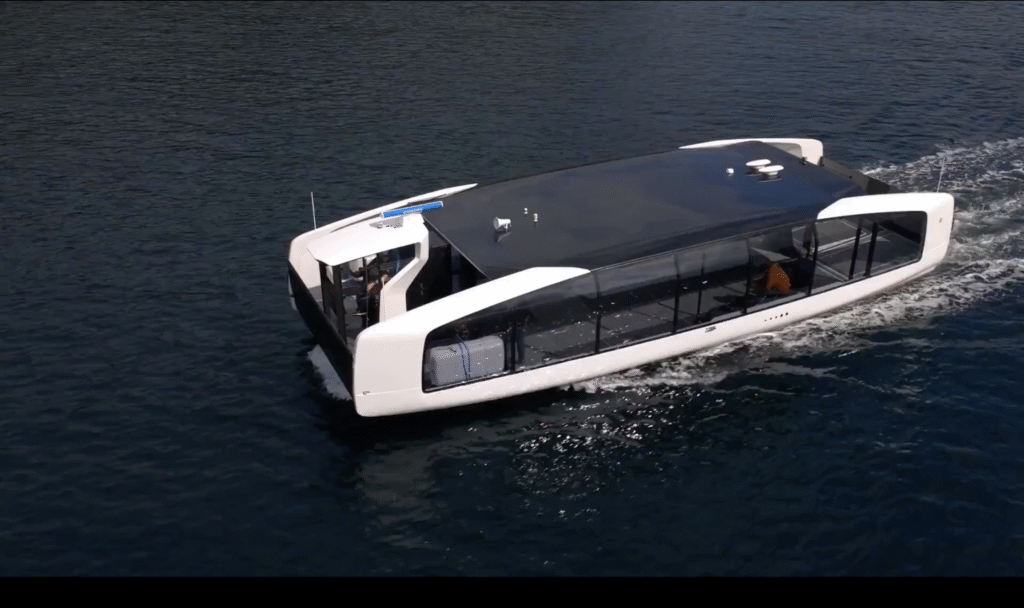
If you’ve ever glided across a glassy lake in near-total silence, you already know there’s something magical about electric mobility on the water. When it comes to maritime sustainability, electric boats have become the practical solution. And they’re getting better every year.
But how exactly do electric propulsion systems power these vessels? Let’s break it all down in a way that actually makes sense.
What Is An Electric Propulsion System?
At its core, an electric propulsion system replaces a traditional diesel or gasoline engine with an electric motor powered by batteries or a hybrid energy source. Instead of burning fuel to create movement, the system converts stored electrical energy directly into mechanical thrust.
The result? Smooth, quiet, and remarkably efficient propulsion that’s changing the way we think about life on the water.
Electric ship propulsion works on the same fundamental principle whether you’re looking at a small recreational boat or a large commercial ferry. Energy flows from the battery pack, passes through a controller that fine-tunes the power delivery, and spins an electric motor that turns the propeller.
The Key Components That Make It All Happen
Understanding how electric boats work starts with getting familiar with the hardware involved.
Each component plays a specific role in keeping the system safe, efficient, and responsive:
- The battery pack sits at the heart of everything. Electric boats use lithium-ion or lithium-iron-phosphate (LFP) batteries, which are sealed to withstand the demanding marine environment.
These packs can range from as little as 10 kWh for a small dinghy to well over 1,000 kWh for commercial vessels. They’re designed to last through thousands of charge cycles, making them a reliable long-term investment.
- From the battery, power flows to an inverter, which converts direct current electricity into alternating current that the motor can use. The motor controller then manages exactly how much power reaches the motor at any given moment, adjusting speed and torque with precision.
- Electric motors deliver full torque from a standstill. In other words, they give you full power instantly, even when the vessel isn’t moving yet. This means that when you’re docking or navigating tight spaces, the boat responds immediately to your control without any delay or sudden jerks.
- The motor itself is typically a permanent magnet synchronous motor (PMSM), a type known for its high efficiency and compact size. These motors are sealed against water ingress and cooled by water-glycol loops, making them well-suited for the marine environment.
In short, it’s built to stay reliable on the water while keeping performance smooth and efficient.
- Tying it all together is the vessel control unit (VCU), which communicates between the throttle, the battery management system (BMS), and the motor controller via a CAN bus network.
Think of the VCU as the brain of the operation. It constantly monitors voltage, temperature, and performance to keep everything running optimally.
How Electric Propulsion Systems Work: A Step-By-Step Breakdown
When you push the throttle forward on an electric boat, the VCU receives your input and signals the battery to release power. The inverter converts that DC power into three-phase AC electricity, varying the frequency and voltage to control how fast the motor spins.
The motor’s rotor starts turning, and through a direct shaft connection or podded drive, that rotation spins the propeller. Water gets pushed backward, and the boat moves forward.
When you slow down, some electric propulsion systems kick into regenerative braking mode. The propeller acts as a turbine, and the motor briefly switches into generator mode, sending energy back into the batteries.
Different Drive Configurations for Different Needs
Not every electric boat uses the same setup.
- Shaft Drive Systems: They connect the motor directly to the propeller shaft and are a popular choice for retrofitting older vessels because they preserve the existing hull design.
- Podded Or Azimuth Drives: They mount under the hull and can rotate a full 360 degrees, giving ferries and larger vessels exceptional maneuverability without needing a separate rudder.
- Waterjet propulsion: This system uses an impeller to draw in water and expel it at high velocity, making it ideal for high-speed recreational boats and shallow-water applications where an exposed propeller could be a liability.
- Rim-drive thrusters: They embed the motor directly into the propeller’s outer ring, achieving some of the highest efficiency ratings of any configuration.
Each of these options can be adapted for new builds or retrofitted onto existing hulls, typically within four to eight weeks, depending on the complexity of the installation.
Power Sources: More Options Than You Might Think
Pure battery operation works well for shorter routes and recreational use, but the world of electric mobility on water has grown far more sophisticated.
Hybrid systems: These types of power sources combine a battery pack with a diesel generator, letting the engine run at its optimal load while the batteries handle power peaks. This improves fuel efficiency while still cutting emissions reduction compared to a conventional diesel-only setup.
Solar panels: They can provide a useful supplementary energy source, particularly on catamarans with larger deck areas. In favorable conditions, they can meaningfully support onboard energy demand and reduce reliance on shore charging, helping improve overall endurance and operational efficiency.
Conclusion
Electric propulsion systems are not just a greener alternative. They’re genuinely better in many of the ways that matter most to boaters. They’re quieter, more responsive, cheaper to run, and far easier to maintain. As battery technology continues to improve and charging infrastructure expands, the range limitations that once gave people pause are steadily shrinking.
Whether you’re considering a small electric runabout or a larger commercial vessel, the technology behind modern electric boats is mature, proven, and ready for the water. The transition to electric mobility on the water isn’t coming; it’s already well underway.