

Introduction: A Turning Point for Maritime Transport
Maritime transport has long been a cornerstone of trade and passenger mobility, yet it has traditionally carried a heavy environmental burden. Today, the sector is undergoing a radical transformation as electric ferries emerge as a sustainable solution that balances efficiency, reliability, and ecological responsibility. With the European Union pushing for carbon neutrality, waterborne transport is becoming a critical player in achieving these goals, and this shift aligns perfectly with the broader climate policies set out by the EU Green Deal. Maritime decarbonisation in Europe is now a legal obligation as well as a climate ambition, making EU funding for electric ferries and regulatory compliance more urgent than ever.
Why Electric Ferries Matter for Urban Mobility
Electric ferries address two of the biggest challenges in maritime transport: greenhouse gas emissions and noise pollution. Unlike conventional vessels powered by diesel, electric ferries operate with zero direct emissions and significantly lower operating costs, making them particularly suited for short, frequent routes in urban environments where demand for clean and quiet transport solutions is increasing rapidly. Cities such as Rotterdam, Lisbon, and Copenhagen are already piloting electric vessel systems, proving that sustainability can coexist with efficiency, and for commuters and tourists alike, the promise is clear: cleaner water transport without compromising convenience. For operators pursuing net-zero maritime transport 2050, electric ferries on short urban routes represent the fastest and most cost-effective entry point into maritime decarbonisation in Europe.
Linking Innovation to the EU’s Climate Ambitions
How does the EU Green Deal apply to ferries?
The EU Green Deal applies to ferries through its Fit for 55 legislative package, which requires a 55% reduction in net greenhouse gas emissions by 2030. Ferries operating in EU waters are subject to FuelEU Maritime regulation compliance, the EU Emissions Trading System (ETS) carbon pricing mechanism, and the Sustainable and Smart Mobility Strategy, all of which create direct incentives to switch from diesel to electric propulsion.
One of the core principles of the EU Green Deal is to ensure no net emissions by 2050, decoupling economic growth from resource use. Electric ferries directly support this ambition by cutting dependence on fossil fuels and integrating seamlessly with renewable energy sources such as solar or wind. Many modern ferry models are built with solar panel compatibility and fast charging infrastructure, making them more adaptable to the green energy grid of the future, and by adopting these technologies, European cities demonstrate how innovative transport solutions can accelerate climate action while fostering economic resilience. This is exactly how the EU Green Deal applies to ferries in practice: translating high-level climate targets into concrete obligations for fleet operators.
Financial Backing and Policy Support: EU Funding for Electric Ferries
What EU funding is available for electric ferries?
EU funding for electric ferries is available through several mechanisms: the NextGenerationEU Recovery and Resilience Facility, the Connecting Europe Facility (CEF) for transport infrastructure, and Horizon Europe research grants for maritime innovation. Electric ferry grants and subsidies in Europe also exist at national and regional levels, particularly in Norway, the Netherlands, Denmark, and Sweden.
Policy frameworks and financial incentives are crucial in scaling up electric water vessel adoption. The European Union has already allocated significant funding through the NextGenerationEU Recovery Plan and long-term budget commitments, with investments directed toward sustainable maritime infrastructure, such as charging stations and smart docking systems that help cities integrate ferries into existing transport networks. The operational savings from reduced fuel and maintenance costs also make electric ferries an attractive option for municipalities facing budget constraints, illustrating how climate policy and financial strategy can work hand in hand. EU funding for electric ferries is further reinforced by electric ferry grants and subsidies in Europe at the national and regional levels, making it now an optimal time for port authorities and municipalities to apply.
EU Regulations and FuelEU Maritime Compliance
What EU regulations apply to electric ferries?
Several EU regulations directly apply to electric ferries. The FuelEU Maritime regulation, which entered into force in 2023, sets greenhouse gas intensity limits for ships operating in EU waters, with progressive tightening through to 2050. The EU Emissions Trading System (ETS) was extended to maritime transport in 2024, meaning ferry operators must now account for carbon costs. The Alternative Fuels Infrastructure Regulation (AFIR) also mandates shoreside electricity supply at major EU ports by 2030.
FuelEU Maritime regulation compliance is one of the clearest legal drivers pushing European ferry operators to accelerate maritime decarbonisation in Europe through battery-electric and hybrid propulsion. Combined with ETS carbon pricing, the financial logic for switching to electric ferries is now stronger than at any previous point in the sector’s history.
Benefits Beyond Emissions Reduction
While emissions reduction is the headline advantage, the broader benefits of electric ferries extend far beyond climate metrics. They improve urban air quality, reducing exposure to harmful pollutants for waterfront communities; they enhance passenger experience through quieter journeys, particularly valuable in densely populated urban areas; and they strengthen energy independence by relying more on renewable sources rather than imported fossil fuels. Together, these benefits reinforce the wider objectives of the EU Green Deal, proving that environmental action also yields social and economic returns. These wider benefits make a strong case for prioritising electric ferry grants and subsidies in Europe as part of any urban mobility strategy.
Success Stories Across Europe
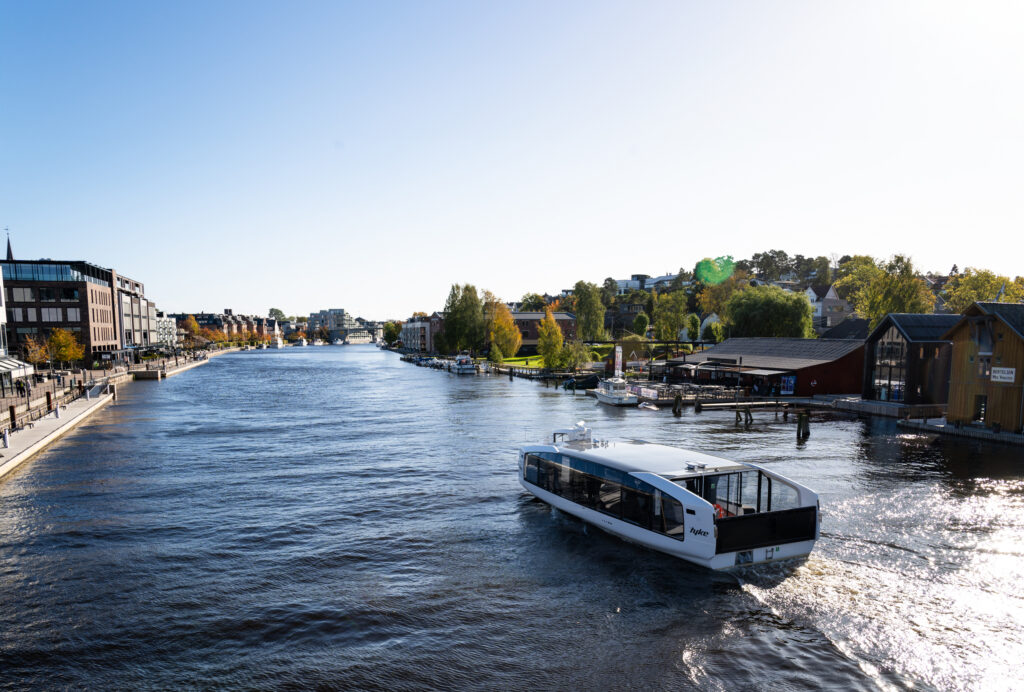
Several pilot projects and commercial operations showcase the potential of electric ferries. In Norway, cities like Oslo and Fredrikstad have integrated fully electric shuttles into public transit fleets, carrying thousands of passengers monthly with positive feedback, while in Stockholm, electric ferries are already demonstrating the viability of scaling such solutions across multiple routes. Each of these examples highlights how electrification can transition from experimental stages to full-scale operations, setting a model for other European cities to follow. The shared lesson is that consistent investment, supportive policy, and strong public acceptance make sustainable mobility on water achievable. Hyke’s Fredrikstad deployment is widely cited as one of Europe’s most successful examples of EU-supported maritime decarbonisation, combining public transit integration, electric ferry grants and subsidies, and zero-emission operations into a single replicable model.
Overcoming Challenges in Adoption
Despite clear advantages, the transition to electric ferries faces several hurdles. High upfront costs for vessels and charging infrastructure remain a barrier for many cities, and standardisation of charging systems and maritime regulations is still evolving across European regions. However, ongoing research, technological advancements, and falling battery prices are expected to reduce these barriers significantly over the next decade, and collaborative projects involving municipalities, shipbuilders, and technology providers are already proving that collective effort can accelerate progress. EU funding for electric ferries, combined with FuelEU Maritime regulation compliance pressures, is now actively closing the cost gap between electric and diesel vessels.
The Road Ahead: Building Sustainable Waterways
As Europe advances toward its 2025 climate milestones, electric ferries will increasingly serve as visible symbols of sustainable mobility, embodying the principles of innovation, inclusivity, and resilience that define the EU Green Deal. By enabling clean, cost-effective, and reliable transport on waterways, these ferries reshape not only how people move but also how cities envision their future, and if adopted widely they could significantly cut maritime emissions, ease urban congestion, and inspire further investments in sustainable technologies. The momentum already building across European ports suggests that the shift is both possible and inevitable, and the UN Sustainable Development Goals provide a global blueprint to end poverty, protect the planet, and ensure prosperity and peace for all. Achieving net zero maritime transport 2050 will require cities to begin adopting electric ferry systems now: the vessels, charging infrastructure, and crew training needed take years to scale, so action must begin well before the decade ends.
Conclusion
The maritime sector is no longer confined to outdated, polluting models. With electric ferries leading the way, Europe has a clear opportunity to demonstrate that environmental responsibility and efficiency can sail together. Through innovative design, strong policy support, and broad public acceptance, these vessels represent more than just a transport upgrade; they embody the very essence of a greener future. By continuing to invest in sustainable waterborne transport, Europe can secure both environmental progress and long-term economic strength, proving that the transition to clean mobility on water is not just desirable but essential. With EU funding for electric ferries, FuelEU Maritime regulation compliance, and a clear pathway to net zero maritime transport 2050, the case for action has never been clearer.
Every journey with Hyke is a commitment to maritime decarbonisation in Europe. From EU funding for electric ferries to FuelEU Maritime regulation compliance, Hyke helps cities navigate the path toward net-zero maritime transport 2050, one zero-emission route at a time.