

Maritime transport is one of the biggest contributors to port-area air pollution. Ships docked at berths continue to run their diesel auxiliary engines, keeping lights on, systems running, and equipment powered. The result is a steady stream of exhaust fumes right where people live, work, and breathe.
Shore power is changing that. And ports like Bilbao are showing exactly how.
What Is Shore Power for Ships and How Does It Work?
Shore power, also called cold ironing or onshore power supply, lets a docked ship plug directly into the local electrical grid. Instead of burning diesel to generate power while at berth, the ship switches off its auxiliary engines and draws electricity from land.
The concept is straightforward: a ship connects to a port’s power supply through standardized connection points. Once connected, it gets everything it needs, from lighting and ventilation to cargo handling systems, without running a single diesel engine.
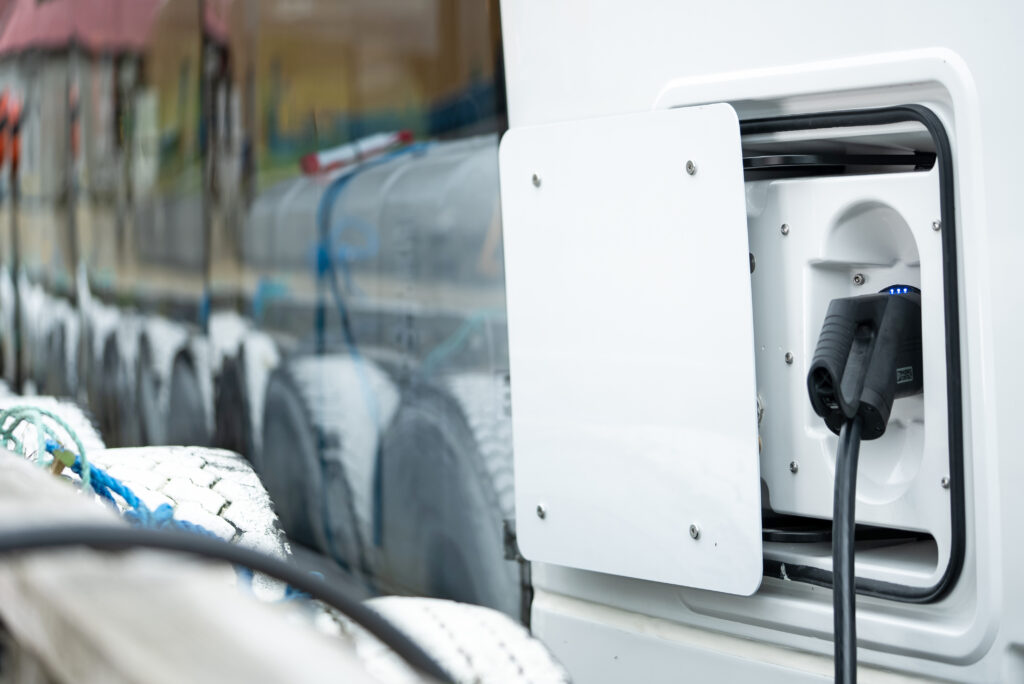
For electric vessels, this is especially important. Electric ferries and other zero-emission ships rely on charged batteries to operate. Shore power charging infrastructure for ferries makes it possible to recharge those batteries reliably between routes, keeping service running without gaps.
Why Is Shore Power Critical for Electric Ferry Operations?
Electric ferries are only as clean as the energy they run on and the infrastructure that supports them. Without reliable shore power charging infrastructure, ferries either burn diesel as a backup or face long downtime waiting for slow charging options.
Shore power for electric ferries solves both problems. When a ferry docks, it can charge quickly and cleanly, ready to head back out in minutes. This keeps operational schedules tight and removes diesel from the equation entirely.
Beyond charging, onshore power supply for ferries also eliminates idle emissions at berth. Traditional ferries running diesel generators while docked create pollution at exactly the wrong place, in busy urban port areas near neighborhoods and waterfront communities.
The Hyke F-15 Shuttle, for example, supports high-power EV charging at up to 200 kW, enabling a full charge in around 30 minutes. That speed only works when port electrification infrastructure is in place to deliver it.
Port Electrification: The Foundation That Makes It All Work
Shore power does not exist in isolation. It depends on port electrification, the broader process of upgrading a port’s electrical grid, connection points, and power systems to handle the demands of modern electric vessels.
Port electrification covers everything from installing high-voltage connection points at berths to integrating renewable energy sources into the port’s power supply. When done well, it transforms a port from a pollution hotspot into a clean energy hub.
This is where projects like Bilbao’s BilbOPS initiative stand out. The Port of Bilbao invested €50.1 million in electrical infrastructure, equipping seven docks to serve containers, RoRo, RoPax, and cruise ships. The system delivers between 1 MW and 12 MW of power and supports 11 connection points across different vessel types.
That kind of flexible, scalable infrastructure is exactly what the maritime sector needs. It does not just serve one type of ship. It serves all of them.
Bilbao’s BilbOPS Project: A Real-World Blueprint
The Port of Bilbao’s approach to shore power is worth looking at closely because it addresses challenges that most ports face: how do you build shore power charging infrastructure for ferries and large vessels at the same time, while keeping the system flexible enough to serve future traffic?
BilbOPS answers that by supporting both 6.6 kV and 11 kV voltages, and both 50 Hz and 60 Hz frequencies. Ships from different countries with different electrical standards can all connect without issues. The system handles up to 16 MVA per berth, enough for even the largest cruise ships.
On top of that, Bilbao is powering its shore power system with renewables. Authorized solar photovoltaic plants at two cruise docks are set to be operational by 2027. There are also plans for a mobile floating platform, called the HILDOVAN project, that generates electricity from hydrogen in partnership with Petronor, Tecnalia, and Ferrovial.
This combination of onshore power supply for ferries and larger vessels, backed by renewable energy, gives Bilbao’s approach its real impact. The port expects a 40% reduction in greenhouse gas emissions, with EU targets calling for 55% reductions by 2030 under the FIT for 55 framework.
What This Means for Urban Ferry Networks
Key Takeaway: Shore power is not just a large-port solution. Medium-sized ports and urban ferry terminals can benefit just as much, especially as electric ferry fleets grow.
For cities building or expanding waterborne transport networks, port electrification is a practical step, not a distant goal. Cities like Barcelona are already moving in this direction, and Bilbao’s model shows that flexible, multi-vessel infrastructure can be built at scale.
Hyke’s urban mobility solutions are designed with this infrastructure reality in mind. Hyke ferries use the Combined Charging System (CCS), the same standard used by electric cars. This means they can plug into existing EV charging infrastructure, reducing the cost and complexity of shore power charging infrastructure for ferry operators and port authorities.
That compatibility matters. It lowers the barrier for cities that want to run clean ferry services but do not want to invest in entirely custom marine charging systems.
Conclusion
The role of shore power in electric maritime transport goes beyond cutting emissions at the dock. It is the link between a clean vessel and a clean energy source.
An electric ferry with a diesel-powered shore connection is still contributing to port pollution. An electric ferry plugged into solar or wind-backed shore power closes that loop completely.
Bilbao’s BilbOPS project shows what committed port electrification looks like in practice: broad vessel coverage, renewable energy integration, and infrastructure built to grow with future demand. It is a useful benchmark for any port or city looking to take electric maritime transport seriously.For ferry operators exploring what comes next, the infrastructure question is just as important as the vessel itself. Want to see how Hyke’s electric ferries fit into this kind of clean port ecosystem? Get in touch with the Hyke team to talk through your route and charging needs.