

Introduction: A New Dawn for Maritime Sustainability
As the world shifts toward cleaner, greener modes of transport, waterways are undergoing a quiet revolution. Electric ferries are emerging as powerful alternatives to traditional diesel vessels, offering zero emissions and reduced operational costs. But one innovation is taking this transformation even further: the integration of solar panels. By harnessing the sun’s limitless energy, solar powered boats offer improved efficiency, lower dependence on grid electricity, and enhanced sustainability. This combination of clean energy and modern engineering is redefining the future of maritime mobility. A solar-powered ferry takes this a step further, and it is one of the clean urban mobility solutions cities can adopt to cut charging demand while keeping services running longer between stops.
The Role of Solar Power in Electric Mobility
E- ferries have already proven their environmental and economic value, but integrating solar energy takes efficiency to the next level. Solar panels mounted on the roof or deck of vessels convert sunlight directly into electricity, which can be used to supplement the onboard battery system. This reduces the need for frequent shore charging and helps extend the ferry’s operational range. In regions with abundant sunshine, such as Southern Europe or coastal Asia, solar integration ensures that sustainable mobility can operate for longer periods between charges. As the demand for sustainable transport grows, the solar-powered boat represents a logical evolution toward complete energy independence. In sunny climates, solar-powered boats can meet a greater share of their daily energy needs from onboard solar generation.
How Integrated Solar Panels Improve Efficiency
The efficiency of e- ferries depends largely on how effectively they manage their energy consumption. Integrated solar panels enhance performance in multiple ways. First, they provide continuous energy input throughout the day, reducing strain on the main battery system and extending battery life. Second, they lower energy costs by reducing dependency on shore-based electricity, especially in ports where renewable grid power is limited. Finally, solar integration reduces overall carbon footprint, as ferries can draw directly from clean, renewable energy rather than fossil fuel-derived electricity. With advancements in lightweight solar materials and flexible panel designs, installation has become simpler and more practical, even on compact ferry models. Together, these gains add up to real solar ferry efficiency and cost savings, especially when panels are paired with shore power for electric ferries to top up batteries overnight.
Smart Energy Management: The Next Step
To make the most of solar energy, many next-generation ferries use smart energy management systems. These intelligent systems optimize how power is distributed between the solar panels, batteries, and propulsion systems. They monitor solar output, predict weather patterns, and adjust energy storage accordingly. This ensures that every watt of energy is used efficiently, minimizing waste and maximizing operational uptime. For example, during daylight hours, the eco transportation may rely primarily on solar-generated power, while at night or under cloudy conditions, it automatically switches to stored battery energy. This seamless balance makes the solar powered boat not just eco-friendly but also highly reliable in real-world conditions. In effect, smart energy management is what turns a solar powered ferry from a good idea into a dependable daily service.
Economic and Environmental Advantages
The integration of solar panels isn’t just an environmental choice, it makes strong business sense. Ferry operators benefit from reduced fuel and energy costs, fewer maintenance requirements, and longer equipment lifespans. Over time, these savings can significantly offset the initial investment in solar technology. Additionally, using solar power reduces greenhouse gas emissions, helping cities and regions meet their climate targets and align with international agreements such as the Paris Accord and the Sustainable Development Goals (SDGs). The solar powered boat, therefore, plays a dual role, supporting environmental protection while offering economic resilience through energy independence. The same logic applies at the quayside, where projects like port electrification in Barcelona show how cleaner harbour infrastructure can complement solar-powered boats and other low-emission ferry technologies.
Hykes Solar Power Integration
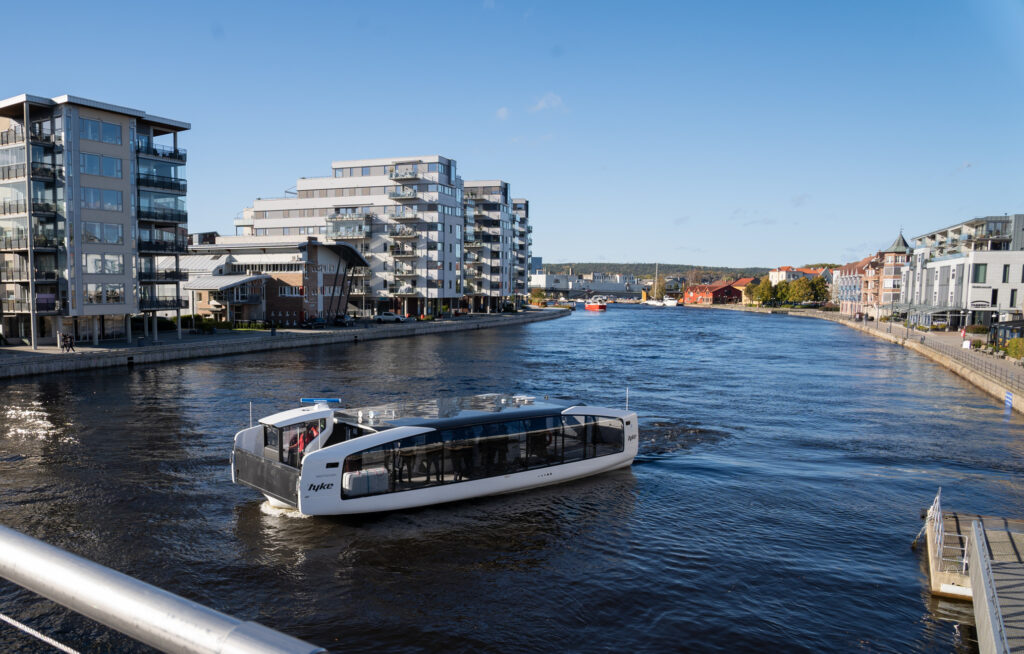
Integrated rooftop solar panels enable Hyke ferries to operate independently using solar power, significantly reducing dependence on shore-based charging. Seamlessly built into the vessel’s roof, these panels offer a sleek and durable design that enhances both functionality and aesthetics. Beyond their visual appeal, they deliver tangible benefits, from enabling solar-only propulsion to cutting down on overall energy costs. Most importantly, this innovation supports a truly sustainable approach to maritime transport, ensuring zero emissions and a cleaner future for waterways. These rooftop photovoltaic solar panels for ferries are seamlessly integrated into the vessel’s roof, providing a durable design while supporting energy efficiency and reducing reliance on shore charging.
The Future of Solar-Integrated Maritime Transport
The future of water mobility is undeniably electric, and solar energy will play a central role in making it sustainable. With every new technological breakthrough, solar integration becomes more efficient, affordable, and scalable. Cities with active waterfronts are increasingly recognizing the potential of electric ferries powered by renewable energy as part of their clean mobility strategies. In the coming years, expect to see more vessels equipped with solar rooftops, intelligent energy systems, and automated docking solutions. Together, these innovations will reduce operational emissions, improve energy efficiency, and accelerate the shift toward zero-emission maritime transport. The solar powered boat, once seen as an experimental idea, now stands as a symbol of the clean, connected future of global waterways. As panels and batteries keep improving, the solar-powered ferry is becoming an increasingly viable option for city waterfronts.
How Efficient Are Solar-Powered Ferries?
Solar-powered ferries are efficient in the sense that integrated panels extend range and cut charging needs rather than powering a vessel outright. On a sunny route, photovoltaic solar panels for ferries can supply a meaningful share of daily energy, trimming shore charging and easing the load on the main battery. Actual output depends on panel area, sunlight, and route length, but even a partial contribution improves solar ferry efficiency and cost savings across a vessel’s working life.
Can Solar Power Replace Diesel in Ferry Operations?
On its own, solar power rarely replaces diesel entirely, because the panel area on a hull is limited and demand can peak when sunlight does not. In practice, a solar powered ferry pairs rooftop panels with a battery-electric drivetrain, so solar supplements clean grid or shore charging rather than acting as the sole source. Combined this way, solar powered boats can remove diesel from many short urban routes while keeping reliable performance in all conditions.
“Be part of the change, invest in sustainable marine mobility with solar powered boats designed for tomorrow’s cities.” Contact Hyke.