

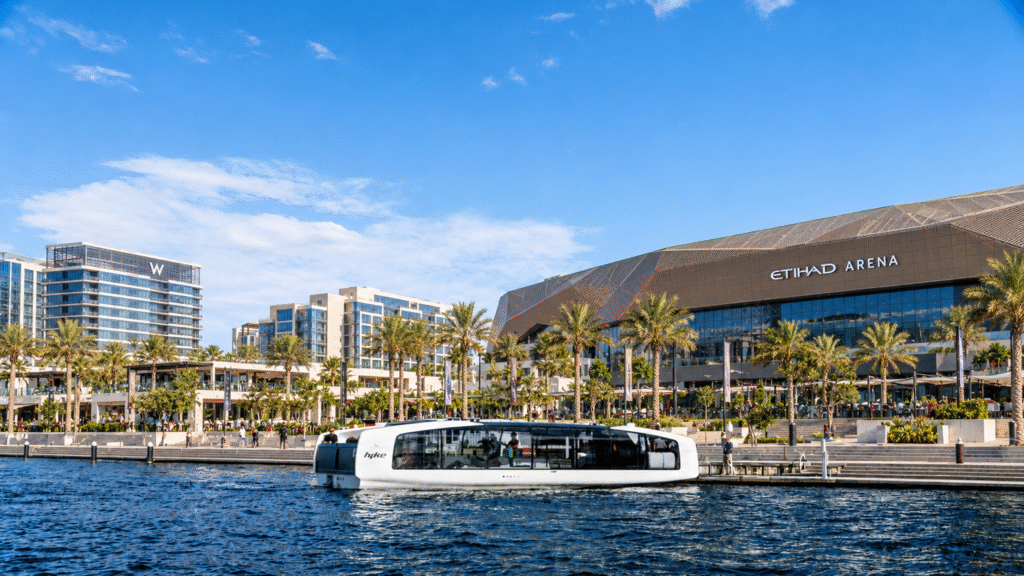
Goa welcomed more than 10.8 million tourists in 2025, and most of them travelled on the same roads and bridges that residents use every day. Yet the state is laced with rivers, estuaries and island crossings, and its government ferries have carried people across the Mandovi and Zuari for generations. As visitor numbers climb and the state pushes tourism beyond its beaches, the question is no longer whether Goa should use its waterways, but how to run them cleanly and reliably. Electric ferries in Goa offer one practical answer: quiet, battery-powered vessels that can ease pressure on bridges and road networks while keeping river travel affordable. This article looks at Goa’s tourism growth, how its ferries work today, what happened with its first solar-electric experiment, and why compact, highly efficient vessels such as Hyke’s F-15 Shuttle could suit Goa’s busiest passenger crossings.
Goa’s tourism boom, in the minister’s numbers
The scale of demand is clear from the state’s own figures. Provisional data released with comments from Tourism Minister Rohan Khaunte puts total 2025 arrivals at 1,08,02,410, including 1,02,84,608 domestic and 5,17,802 foreign tourists. International travel is also recovering: 1,784 international flights operated through Goa’s two airports in 2025, and 37 cruise ships called at the state, bringing in 51,510 passengers.
Khaunte has framed this as evidence of structured, balanced growth supported by improved connectivity and destination readiness. His wider strategy points in a direction that suits water transport. Under the “Goa Beyond Beaches” vision, the minister has described moving tourism from the coast to the hinterland as a step toward green tourism, including a transition to sustainable infrastructure and operations. He has also placed emphasis on backwater tourism and on quality rather than quantity.
Rivers connect the coast to exactly those hinterland villages, heritage sites and islands. Clean, comfortable river transport could carry visitors there without adding more cars to narrow village roads.
How Goa’s river ferries work today
Goa ferry services are run by the state’s River Navigation Department and are a lifeline for island and riverside communities. Ferries serve places such as Divar, Chorao, Vanxim and Narve, where there is no bridge access, and the Madkai to Cortalim crossing on the Zuari is the longest in the state. Commuters also use the Panaji to Betim crossing to avoid congestion on the bridges over the Mandovi.
The fleet is being modernised. In July 2025, the state commissioned two roll-on roll-off ferries on the Chodan–Ribandar route across the Mandovi, linking Chodan, also known as Chorao Island, with Ribandar on the outskirts of Panaji. The River Navigation Minister said the new vessels would cut the crossing to about 12 minutes, compared with around 30 minutes by conventional ferry. This upgrade shows that Goa ferry services are being treated as real infrastructure. The next logical step is cleaner propulsion.
Do electric ferries already operate in Goa?
Only in a limited way so far. In October 2022, Goa commissioned its first solar-electric-diesel hybrid passenger ferry, intended for the Chorao to Panaji route, after officials studied Kerala’s solar ferries. The vessel was not fully electric, and it never settled into regular service. In July 2025, the River Navigation Minister told the state assembly that the boat had not been built to specifications, had run for about three months on the Betim to Panaji route before being shut down for technical reasons, and would be offered to private operators under a public-private partnership. Earlier reports also pointed to low use and to the vessel’s inability to carry the two-wheelers and cars that island commuters rely on.
The private sector has moved too. In July 2025, Goa’s Chief Minister launched the first privately owned solar-electric passenger cruise boat on the Mandovi, describing it as good for tourism and for lowering emissions.
So the honest answer is that a solar electric ferry in Goa has been tried, but the state does not yet have fully electric public ferries in regular service. The earlier experiment is useful precisely because it shows what to get right next time. It also explains why the case for electric ferries in Goa now rests on fully electric vessels matched to the right routes, rather than on hybrids asked to do every job.
Is the ferry free in Goa, and can electric ferries keep it affordable?
For most people, yes. Across the River Navigation Department’s network, foot passengers, two-wheelers and three-wheelers are exempt from ferry tolls, so only four-wheelers and cargo pay. Those tolls are set by government notification and vary by route: the schedule published on the department’s website lists ₹7 for a car on crossings such as Old Goa to Piedade, ₹10 on routes including Panaji to Betim and Ribandar to Chorao, and ₹27 on the longer Madkai to Cortalim crossing.
The Chodan–Ribandar Ro-Ro service is priced separately. Ahead of its launch, the department’s director announced a distinct fare structure for the Ro-Ro ferries: pedestrians and two-wheelers still travel free, cars pay ₹30 per trip or ₹15 with a pass, and tourists taking the crossing as a joyride pay ₹50, with higher charges for rental and tourist vehicles. These Ro-Ro fares apply to that service only, not to Goa’s other ferry routes.
Keeping fares low depends partly on keeping running costs low, and that is where fully electric vessels can help. Fuel is one of the largest costs of a diesel ferry. In Hyke’s 14-month public transport trial in Norway, the fully electric F-15 Shuttle used up to 88% less energy than comparable diesel vessels, according to the municipality’s report. Electric drivetrains also have fewer moving parts to maintain. For a state that subsidises Goa ferry services as a public good, lower energy and maintenance costs could make it easier to keep crossings free or cheap for residents while still offering visitors a better experience. How much would be saved in practice would depend on each route, how intensively the vessels are used, local electricity prices and the upfront cost of vessels and charging.
The Ro-Ro’s fares already distinguish between local commuters and visitors. Extending that principle, for example with a modest tourist fare on dedicated scenic or heritage passenger routes while local commuters continue to travel free, would let visitors contribute to running costs without burdening residents. Combined with potentially lower running costs, that approach could help electric ferries in Goa expand service on busy crossings while keeping the cost to the public purse under control.
Mandovi and Zuari river ferry routes: where electric ferries in Goa could fit
Not every crossing needs the same vessel. Vehicle crossings to islands such as Chorao and Divar will continue to need car-carrying ferries. But the Mandovi and Zuari river ferry routes also carry a large and growing share of foot passengers, cyclists and tourists, and that is where passenger-only electric ferries are strongest.
Short, frequent crossings such as Panaji to Betim, or links between Panaji’s riverfront, Old Goa’s heritage sites and the islands near the Salim Ali Bird Sanctuary, suit battery-electric shuttles well. The trips are short, the vessels return to the same landing points, and charging can happen between runs. A dedicated passenger service would also take pressure off vehicle ferries at peak times and shorten queues for everyone. Splitting foot passengers from vehicle traffic in this way lets each vessel do the job it is designed for, a mismatch that was among the problems reported with the earlier hybrid ferry.
On the Zuari, river links that connect tourist areas with hinterland villages would support the minister’s push to spread visitors beyond the beaches. Goa’s electric ferries could turn a river crossing into part of the visit itself, quietly, with no fumes on deck. Cities with comparable waterways, from sustainable water transport in Utrecht to Norway’s river towns, are already proving the model.
Lessons for the next solar electric ferry in Goa
Goa’s first attempt offers clear lessons. The vessel must match the route: a passenger-only boat on a crossing where most users need to carry vehicles will struggle, however clean it is. Demand should be assessed before procurement, and the service should be timetabled and promoted as part of the network rather than as a stand-alone trial.
Charging needs equal attention. Reliable shore connections at landing points, sized for quick top-ups, keep vessels moving during peak hours; shore power for electric ferries explains how this works in practice. Rooftop solar can supply onboard systems and extend range, but a well-designed solar electric ferry in Goa should treat solar as a supplement to grid charging rather than its only power source, particularly through the monsoon.
Making electric ferries in Goa work in practice
The building blocks already exist, and electric ferries on Goa’s rivers would not require untested technology. Hyke’s F-15 Shuttle shows what a vessel designed for these conditions looks like. During its Norwegian pilot, the vessel carried more than 41,000 passengers with no safety incidents recorded, and passengers reported high satisfaction with the service.
Sized for passenger crossings. The F-15 is a 14.9-metre, passenger-only vessel that carries around 50 people, designed for short urban crossings in sheltered water. That is the gap Goa’s network needs to fill: frequent foot-passenger services that run alongside the state’s car-carrying ferries rather than competing with them, addressing one of the problems reported with the earlier hybrid. With a draft of around one metre, it suits simple floating jetties and the shallower reaches of tidal rivers, subject to a route survey.
Very low energy use. At service speed, the F-15 draws roughly as much power as five household hair dryers. On a network where most crossings are free, that efficiency directly eases running costs.
Simple to charge and run. Rather than specialised shore infrastructure, the F-15 charges from a standard CCS2 electric-vehicle fast charger at up to 150 kW in under an hour, or overnight from a 22 kW AC supply. Optional integrated solar panels can add onboard energy in Goa’s sunshine. Standard, well-proven systems also reduce reliance on scarce specialist skills, a gap the River Navigation Department reported when it tried to bring the 2022 hybrid into service.
Flexible for commuters and visitors. The open, step-free interior can be laid out for quick commuter boarding or fitted out for heritage and backwater tourism. One platform could serve Panaji commuters at peak hours and carry visitors to Old Goa or the islands in between, without engine noise or fumes.
Alongside the vessels, Goa would need accessible jetties, integrated ticketing with the River Navigation Department’s digital systems, monsoon operating plans and clear coordination between the tourism and river navigation departments. Capacity, configuration and monsoon operation would need to be confirmed through route surveys and local certification. Starting with one or two high-demand passenger crossings and publishing the results would let the state measure ridership, energy use, and costs before scaling up, and build public confidence after the earlier hybrid experience.
Conclusion
Goa’s tourism is growing, its roads and bridges are under pressure, and its rivers are already part of daily life. Electric ferries in Goa could carry more residents and visitors across the Mandovi and Zuari with no fumes and lower running costs, helping keep the state’s tradition of free or low-cost crossings sustainable while supporting the push to spread tourism beyond the beaches.