

The global transportation landscape is undergoing a historic transformation. Governments, industries, and consumers are rapidly shifting away from fossil-fuel-powered vehicles, including road vehicles and water-based transport such as electric ferries, toward cleaner electric vehicles.
At the centre of this transition lies the electric vehicle market, which now spans electric cars, commercial vehicles, public transport, and electric ferries, and continues to expand at an unprecedented pace. Looking ahead to 2035, this market is set to redefine mobility, energy consumption, and environmental responsibility worldwide.
In this article, the term electric vehicles refers to both road-based vehicles and water-based electric mobility solutions, reflecting the full scope of the global electric vehicle market. Across every segment, the electric vehicle market forecast 2035 points to sustained, broad-based growth, spanning private cars, commercial fleets, and urban mobility solutions on the water.
The Current State of the Electric Vehicle Market
Today, the electric vehicle market is no longer a niche segment. Electric cars, buses, commercial vehicles, and water-based electric vehicles have entered the mainstream. Falling battery costs, improved vehicle range, and the rapid expansion of charging infrastructure have accelerated adoption across both developed and emerging economies.
Major automotive manufacturers are investing heavily in electric vehicles, while technology-driven startups are pushing innovation in efficiency, design, and software integration. As a result, electric vehicles increasingly compete with internal combustion engine vehicles on performance, reliability, and total cost of ownership.
The broader electric mobility market now represents a critical pillar of sustainable transport strategies, helping cities and regions reduce emissions while improving overall mobility efficiency. Most EV market share projections for 2035 build on exactly this momentum, expecting electric models to move from a fast-growing minority toward the majority of new sales in leading markets.
Key Drivers Fueling Electric Vehicle Market Growth
Several powerful forces are driving the electric vehicle market growth through 2035. Governments worldwide are introducing stricter emissions regulations and announcing timelines to phase out petrol and diesel vehicles. These policies are accelerating the shift toward electric vehicles across both public transport and private mobility.
At the same time, advances in battery technology continue to reduce costs while extending driving range. Rising fuel prices further strengthen the economic case for electric vehicles, while increasing public awareness of climate change pushes consumers and organisations toward electric mobility solutions.
Together, these factors are shaping a strong electric vehicle market outlook for the coming decade. These combined drivers underpin most global EV market size projection 2035 scenarios, which foresee continued double-digit expansion across cars, fleets, and vessels.
Technology Advancements Shaping the Future of Electric Vehicles
Innovation remains a cornerstone of the electric vehicle market. Battery technology is evolving rapidly, with solid-state batteries and ultra-fast charging solutions promising shorter charging times, higher energy density, and longer operational lifespans for electric vehicles.
Smart charging systems, vehicle-to-grid integration, and energy management platforms are also improving how electric vehicles interact with power grids. Software plays an increasingly critical role as well, with artificial intelligence, connectivity, and data analytics enhancing electric vehicle efficiency, safety, and user experience.
These developments position electric vehicles not only as cleaner alternatives but as smarter and more integrated electric mobility solutions. Because these technologies keep maturing, the electric vehicle market forecast 2035 assumes longer ranges, faster charging, and smarter energy management as standard rather than premium features.
Market Growth Across Vehicle Segments: Cars, Commercial Fleets, and Ferries
The electric vehicle market is expanding across multiple segments. Electric cars currently lead adoption, but commercial vehicles and public transport systems are scaling rapidly. Electric buses, delivery vans, and fleet-based electric vehicles benefit from predictable routes, lower operating costs, and centralised charging infrastructure.
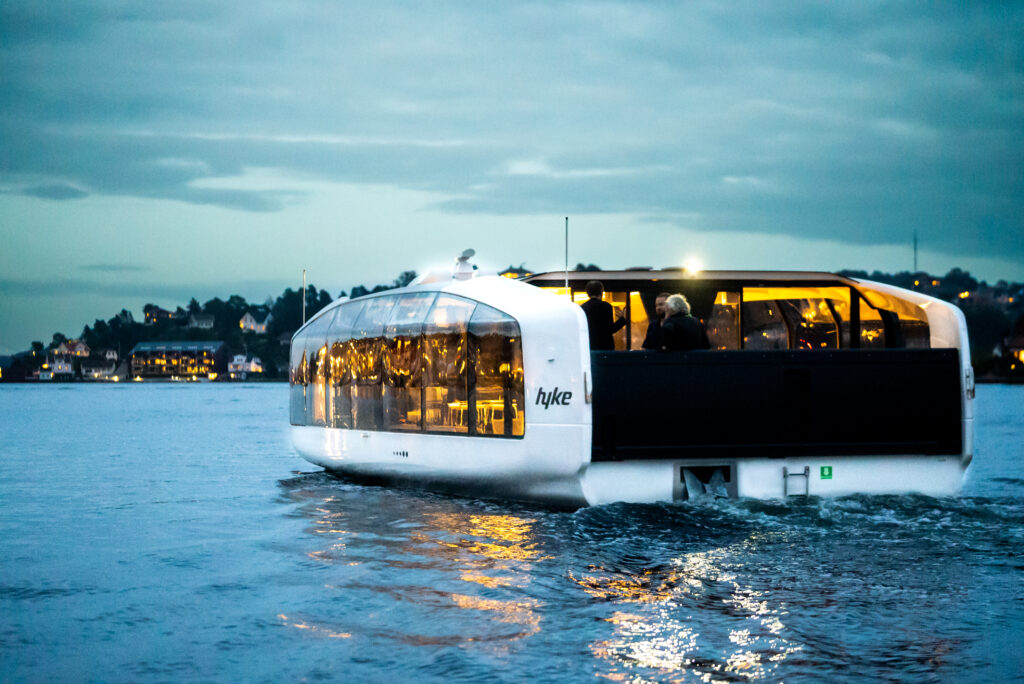
Beyond roads, electric mobility is increasingly extending into water transport. Electric ferries and water taxis are being adopted in urban waterways and coastal regions where predictable routes, strict emission regulations, and noise reduction requirements make electrification particularly effective. This demonstrates how different transport segments contribute to the broader electric vehicle market. Water transport is a clear example, with electric ferry market growth accelerating on predictable urban routes, much like the vessels behind Hyke’s electric ferry shuttle.
Regional Outlook and Global Trends in the Electric Vehicle Market
Regional adoption patterns vary across the electric vehicle market. Europe continues to lead through strong regulatory frameworks, sustainability mandates, and public investment in electric vehicles. The Asia-Pacific region, driven by China and India, shows rapid growth supported by large-scale manufacturing, government incentives, and expanding electric mobility infrastructure.
North America focuses heavily on charging networks and private-sector innovation, while emerging markets are adopting electric vehicles to reduce fuel imports and improve access to clean, affordable public transport and electric mobility solutions.
Together, these regions contribute to a dynamic and globally connected electric vehicle market outlook. Europe’s mandates support the strongest EV market share projections for 2035, while Asia-Pacific programmes, including India’s Kochi Water Metro, widen adoption on both roads and waterways.
Economic and Environmental Impact of Electric Vehicles
The expansion of the electric vehicle market delivers both economic and environmental benefits. It creates new jobs across electric vehicle manufacturing, software development, energy production, and charging infrastructure. At the same time, electric vehicles significantly reduce greenhouse gas emissions and improve air quality, particularly in densely populated urban areas.
As electricity generation increasingly shifts toward renewable sources, electric vehicles will play a central role in decarbonising transport systems and supporting long-term climate goals. A larger global EV market size projection for 2035 also means bigger climate gains, echoing the wider environmental benefits of electric ferries seen on electrified waterways.
Challenges That Could Shape the Electric Vehicle Market
Despite strong momentum, the electric vehicle market still faces challenges. Raw material supply constraints, charging infrastructure gaps, and grid capacity limitations affect the scalability of electric vehicles. Affordability and consumer confidence also remain key factors, particularly in price-sensitive regions.
Addressing these challenges will require collaboration between governments, manufacturers, energy providers, and electric mobility innovators. Even so, the electric vehicle market forecast 2035 depends on solving raw-material supply, grid capacity, and affordability at the same pace as demand grows.
The Electric Vehicle Market Outlook by 2035
By 2035, electric vehicles are expected to dominate new vehicle sales in many regions. Internal combustion engine vehicles will continue to decline, while electric mobility becomes the standard across personal transport, commercial vehicles, public transport, and water-based electric vehicles such as electric ferries and water taxis.
Integration with smart cities, renewable energy networks, and digital infrastructure will further strengthen the role of electric vehicles in future mobility ecosystems. By the end of the period, electric ferry market growth is expected to mirror road transport, as water taxis and passenger ferries become routine parts of city networks.
How big will the electric vehicle market be by 2035?
By 2035, most forecasts expect the electric vehicle market to lead new vehicle sales across many regions, with electric models becoming the default choice rather than the exception. Exact figures vary by source, but the electric vehicle market forecast 2035 consistently points to strong double-digit growth spanning cars, commercial fleets, public transport, and water-based vehicles. Falling battery costs, tighter emissions rules, and expanding charging networks drive these ev market share projections 2035.
How is the electric ferry market growing alongside EVs?
The electric ferry market growth is following the same curve as road EVs, but it is concentrated where routes are fixed and emission rules are strict, such as urban waterways and coastal cities. Predictable schedules, shared charging, and quieter operation make ferries an efficient place to electrify, which is why electric ferry market growth features in most global EV market size projection 2035 outlooks. Projects from Scandinavia to India show how quickly waterborne electrification can scale.
Conclusion
The electric vehicle market stands at the forefront of a global mobility transformation. Driven by policy, technology, and environmental responsibility, electric vehicles are reshaping how people and goods move across cities, regions, and waterways.
As adoption accelerates toward 2035, electric vehicles will play a central role in building cleaner, smarter, and more resilient transportation systems. Organisations and cities that invest early in electric mobility will be better positioned to achieve long-term sustainability and operational efficiency. Contact Hyke to learn how forward-thinking electric mobility solutions can support your long-term sustainability and transport goals. Acting on the electric vehicle market forecast 2035 now, rather than later, is how organisations lock in lower costs and emissions before electrification becomes the default.