

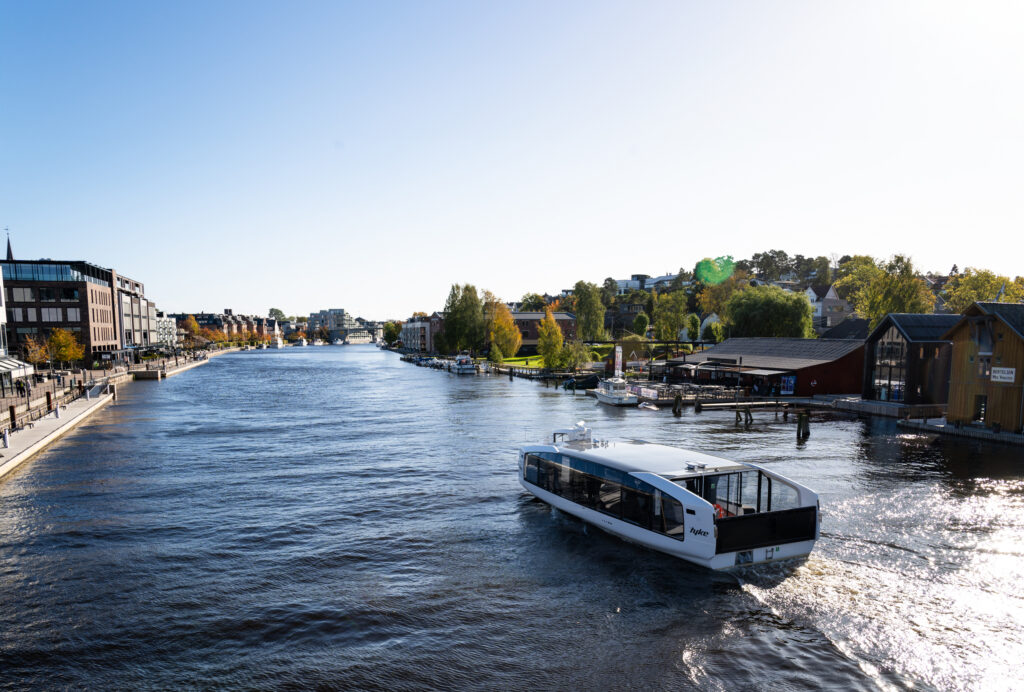
As cities evolve, planners and policymakers must identify which transport solution works best to achieve sustainable transport for future generations. Electric ferries and electric buses both offer emissions-free mobility, but their applications depend on unique urban layouts, geography, and infrastructure needs. This article explores the advantages, challenges, and practicality of each to determine which better supports a long-term vision of eco-friendly transport. This electric ferry urban transport debate matters because the right mix of modes decides how cleanly and affordably a city moves millions of people each day, even as the wider electric vehicle market shifts rapidly to zero-emission transport.
Understanding the Role of Sustainable Transport in Modern Cities
Sustainable transport prioritises environmental protection, resource efficiency, and accessibility without compromising future generations’ ability to meet their own mobility needs. It includes technologies, policies, and infrastructure that reduce carbon emissions while improving quality of life in crowded urban environments. Governments are investing in electric fleets to combat climate change and reduce reliance on fossil fuels in public transportation systems. Electric ferries and EV buses now symbolise progress in clean urban mobility and the worldwide push toward sustainable mobility strategies. At its core, sustainable city transportation is about moving more people with fewer emissions, using land, water, and energy as efficiently as possible.
Electric Ferries: A Rising Wave in Urban Mobility
Electric ferries shine in coastal cities or urban areas with rivers, lakes, or islands that hinder traditional ground transportation systems. They eliminate diesel fumes and engine noise, providing a quiet, smooth, and eco-friendly commuting experience across waterways with minimal infrastructure impact. Many cities like Stockholm, Amsterdam, and Bangkok have embraced electric ferries for reducing congestion and offering scenic commuting alternatives. Cities with well-integrated ferry service networks experience smoother intermodal transportation, especially where bridges or tunnels are limited. Norway’s “Hyke” project even pioneers smart electric ferries that are prepared for autonomous operation and fully integrated into existing urban public transport networks. For electric ferry urban transport, purpose-built vessels such as Hyke’s electric ferry shuttle show how quiet, zero-emission crossings slot neatly into existing public transport.
Advantages of Electric Ferries
Electric ferries reduce shoreline pollution and improve water quality while promoting more balanced city planning between land and water networks. They can carry many passengers with minimal staffing, making them ideal for environmentally conscious tourism and public transportation simultaneously. Unlike buses, ferries encounter less friction and can travel longer distances on water using less energy per passenger. Additionally, ferry terminals require less urban land, which is increasingly valuable and often scarce in densely populated cities worldwide. Beyond congestion relief, electric ferry urban transport delivers the wider environmental benefits of electric ferries, from cleaner harbour air to reduced shoreline pollution.
Challenges of Electric Ferries
Not every city benefits from natural waterways, which makes implementing electric ferries geographically restrictive and sometimes economically impractical. Ferry operations face unpredictable water conditions, weather challenges, and require highly specialised maintenance compared to traditional land vehicles. Initial investment in charging infrastructure, dock facilities, and vessel acquisition is significantly higher than for electric buses. Moreover, electric ferries may have slower boarding and unloading processes, particularly during peak hours or tourism-heavy seasons. In any honest electric ferries vs electric buses comparison, the higher upfront cost of vessels, docks, and charging is the clearest drawback for ferries.
Electric Buses: Leading the Urban Charge on Land
Electric buses are becoming the backbone of city transit networks in dense areas where road-based infrastructure is well-established and utilised. They offer a flexible, scalable solution that can serve nearly every neighbourhood regardless of terrain, demographics, or economic development. These EV buses run quieter, emit zero tailpipe emissions, and significantly reduce noise pollution in congested residential and commercial areas. China leads globally with its widespread adoption of electric buses, while European and American cities are quickly closing the implementation gap. For dense inland districts, buses remain a backbone of sustainable city transportation, complementing the water routes described in Hyke’s urban mobility solutions.
Advantages of Electric Buses
Electric buses can be easily integrated into existing road networks without the need for major structural or geographic modifications. They suit short-to-medium routes with frequent stops, which makes them ideal for daily commuting and school or corporate shuttle services. Technological advances allow buses to recharge rapidly or wirelessly while waiting at terminals, minimising downtime and maximising efficiency. With lower upfront costs than ferries, cities can deploy larger fleets of buses to serve greater populations more quickly and affordably. Their flexibility and low entry cost make buses central to the future of sustainable transportation in cities without navigable waterways.
Challenges of Electric Buses
Electric buses face range limitations and struggle on long routes or steep gradients unless supported by advanced battery technologies. Heavy traffic and unpredictable road conditions can affect their performance, punctuality, and energy efficiency compared to ferries. Battery disposal, mining of lithium, and grid dependency raise sustainability questions that must be addressed to maintain long-term effectiveness. Bus charging depots also consume large urban spaces, which could be better utilised for housing, green areas, or community developments. The same electric ferries vs electric buses comparison shows buses struggling with range, gradients, and traffic that rarely affect a ferry on open water.
Which One Wins: Electric Ferry or Electric Bus?
Choosing between electric ferries and buses depends entirely on city geography, population density, environmental priorities, and transportation budgets. In island-dotted or water-rich cities, electric ferries complement sustainable mobility goals while easing traffic congestion and tourist overload. Inland megacities with sprawling road networks and bus-friendly policies naturally lean toward electric buses for widespread accessibility. Some forward-thinking cities combine both options to offer a multimodal, resilient, and inclusive model of sustainable mobility for their citizens. The honest answer to any electric ferries vs electric buses comparison is that geography decides, and many cities will run both.
Why are electric ferries better than electric buses for waterfront cities?
In waterfront cities, electric ferries often beat buses because they use the water directly, skipping congested roads, bridges, and tunnels to link islands, riverbanks, and harbours by the shortest possible path. An honest electric ferries vs electric buses comparison shows ferries carrying more passengers per trip with less energy over distance, while needing far less scarce urban land than roads or bus depots. Buses still win on dense inland streets, but where navigable water exists, electric ferry urban transport usually offers the faster, cleaner, and more space-efficient route.
How do electric ferries reduce noise pollution in urban areas?
Electric ferries reduce noise pollution by replacing loud combustion engines with quiet electric motors, so they glide through the water with minimal vibration and no engine roar. This removes a major source of noise from busy waterfronts and terminals, protecting both residents and marine life from the constant drone of diesel vessels. Quieter waterways make ferry corridors more pleasant to live and work beside, which is one reason electric ferry urban transport fits so well into sustainable city transportation plans.
The Future of Urban Travel Lies in Smart Integration
Ultimately, sustainable transport does not depend on one mode replacing the other, but rather on intelligently combining them for urban synergy. Smart city planners will continue investing in real-time data, clean energy grids, and mobility platforms to unify ferries, buses, and trains. Citizens will demand convenience, affordability, and eco-conscious options, making electric transport the gold standard in future cities. Whether it’s a sleek electric bus or a floating Hyke ferry, innovation will continue to drive the future of eco-friendly transport. Ultimately, the future of sustainable transportation is multimodal, linking ferries, buses, and trains through shared data and clean-energy grids.
Ready to Reimagine Your Commute? Explore how Hyke’s electric ferry service can seamlessly integrate into your city’s transport ecosystem, cleaner, quieter, smarter. Talk to us today!