
Introduction: Norway’s Climate Neutrality Vision
Norway has set one of the most ambitious climate targets in the world, achieving complete climate neutrality by 2030. This bold goal requires decisive action across all sectors, especially transportation, which remains a major source of carbon emissions. Given Norway’s unique geography, with countless fjords, islands, and coastal towns connected by ferries, maritime transport has a particularly large role in shaping emissions. Electric ferries are now seen as one of the most impactful solutions in this transition, helping Norway reduce its reliance on fossil fuels while embracing renewable energy as the foundation of its future. Within this plan, Norway’s electric ferry services are one of the fastest ways to cut transport emissions, because the vessels can run on the country’s abundant hydropower.
The Role of Maritime Transport in Norway
Maritime transport is central to daily life in Norway. Ferries carry thousands of passengers, vehicles, and goods every single day, ensuring connectivity in areas where bridges and tunnels are not feasible. Yet, traditional diesel-powered ferries have historically been heavy polluters, producing significant amounts of CO2, particulate matter, and noise. In fact, ferry traffic accounts for a considerable share of Norway’s overall transport-related emissions. If the country is to meet its 2030 neutrality goal, decarbonizing ferry operations is not just an option but a necessity. This is where electric ferries provide a scalable, clean, and efficient alternative powered by renewable energy. These frequent crossings can shift to diesel without losing dependability when a route brings together electric ferries and renewable energy in Norway.
Electric Ferries as a Game-Changer
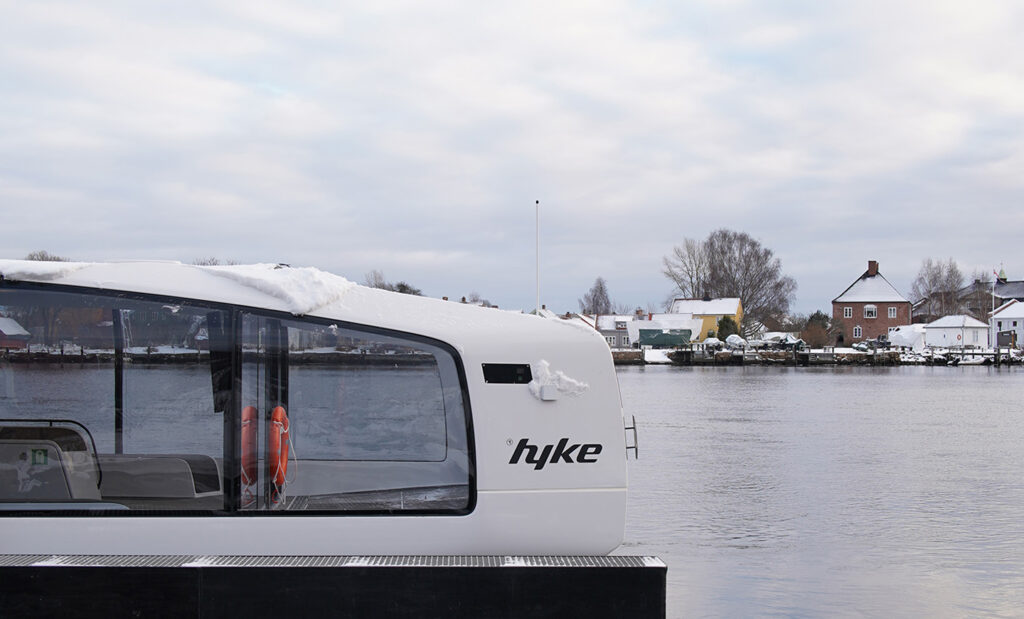
Electric ferries represent a revolution in maritime transport. By replacing diesel engines with battery-powered propulsion, these vessels dramatically reduce CO₂ emissions and completely eliminate tailpipe pollutants. They also operate more quietly, creating less disruption to coastal communities and marine life. Modern electric ferries, developed by Hyke, are equipped with cutting-edge technologies such as CCS fast charging, solar panel compatibility, and autonomy-ready designs. These innovations make it adaptable to diverse routes and operational demands. By integrating renewable energy into their charging systems, electric ferries can run on clean electricity generated from hydropower, wind, or solar, further amplifying their role in Norway’s transition to sustainability. Norway’s electric ferry fleet can use standard CCS connectors, so operators rely on widely available equipment rather than bespoke systems, as detailed in our guide to high-power EV charging for ferry fleets.
Policy and Government Support
Norway’s progress in ferry electrification is not accidental. The government has prioritized clean maritime transport through a series of forward-looking policies and investments. Public tenders for ferry routes increasingly require operators to deploy low- or zero-emission vessels. Subsidies and incentive programs help cover high initial investment costs, making electric ferries a more attractive choice for fleet operators. Additionally, Norway collaborates with private companies to build shared charging infrastructure that aligns with green energy sources. These policies not only accelerate decarbonization but also position Norway as a global leader in maritime innovation. This public funding ties shared charging directly to the Norway’s 2030 climate neutrality target, so operators can electrify routes without each building costly grid connections.
Broader Impact on Climate Neutrality
The electrification of ferries does more than reduce local emissions; it also contributes significantly to Norway’s broader 2030 climate neutrality strategy. Each ferry converted to electric propulsion directly lowers the nation’s carbon footprint and demonstrates how green energy can transform essential public services. Furthermore, the success of electric ferries creates momentum for electrifying other transport modes such as buses, trucks, and even short-sea shipping. In this way, ferries act as symbols of Norway’s wider green transition, proving that clean technologies can deliver reliability, cost savings, and environmental benefits simultaneously. Each converted route strengthens the Norway’s 2030 climate neutrality strategy and gives other public services a proven template for going electric.
Challenges and Solutions
Despite their promise, electric ferries face challenges that need to be addressed to ensure long-term success. High upfront investment costs remain a barrier for many operators, and charging infrastructure requires careful planning to avoid grid strain. Additionally, uniform standards for maritime EV charging are still evolving, creating potential compatibility issues between fleets. However, solutions are emerging quickly. High-power EV charging systems, as those Hyke promotes, are compact, cost-efficient, and compatible with existing infrastructure. Grid challenges can be mitigated by integrating renewable energy sources such as solar microgrids or offshore wind, making ferry charging both clean and reliable. Public-private partnerships also play a critical role in sharing costs and risks, ensuring sustainable progress. Compact, standardized charging keeps electric ferries and renewable energy in Norway working together, steadily removing the cost and grid barriers that once held projects back.
How are electric ferries helping Norway reach its 2030 climate goals?
Electric ferries help Norway reach its 2030 climate goals by replacing diesel vessels on busy coastal routes with zero-emission crossings powered by clean hydropower. Because the country pairs electric ferries and renewable energy in Norway, every route switched to battery power cuts transport emissions without adding fossil-fuel demand. Public tenders that require low- and zero-emission vessels, together with shared charging, are advancing Norway’s electric ferry projects toward Norway’s 2030 climate neutrality target.
What role do electric ferries play in Norway’s maritime decarbonisation?
Electric ferries are central to Norway’s maritime decarbonisation because ferries carry millions of passengers and vehicles across fjords where bridges are impractical, so cleaning them up removes a major emissions source. Norway’s electric ferry services run on renewable electricity, operate quietly, and show that clean technology can match diesel-era reliability. Scaling electric ferries and renewable energy in Norway also builds momentum for decarbonising buses, trucks, and short-sea shipping.
The Big Picture: 2030 and Beyond
As Norway moves toward its 2030 climate neutrality goal, electric ferries will remain a cornerstone of the strategy. They not only decarbonize a vital sector but also inspire confidence in renewable energy as the backbone of the nation’s future economy. Looking beyond 2030, the vision includes fleets that are fully autonomous, integrated with other public transport systems, and capable of connecting international networks. The ripple effect of ferry electrification will extend beyond maritime transport, encouraging broader adoption of clean technologies in other sectors. By leading with electric ferries, Norway sets a global example of how renewable energy and innovation can power both sustainable development and economic growth. Sustained investment in Norway’s electric ferry sector keeps the country on course for 2030, and the same clean-charging model is explored in our overview of the environmental benefits of electric ferries.
Explore how Hyke electric ferries harness renewable energy to make Norway’s 2030 climate neutrality vision a reality.